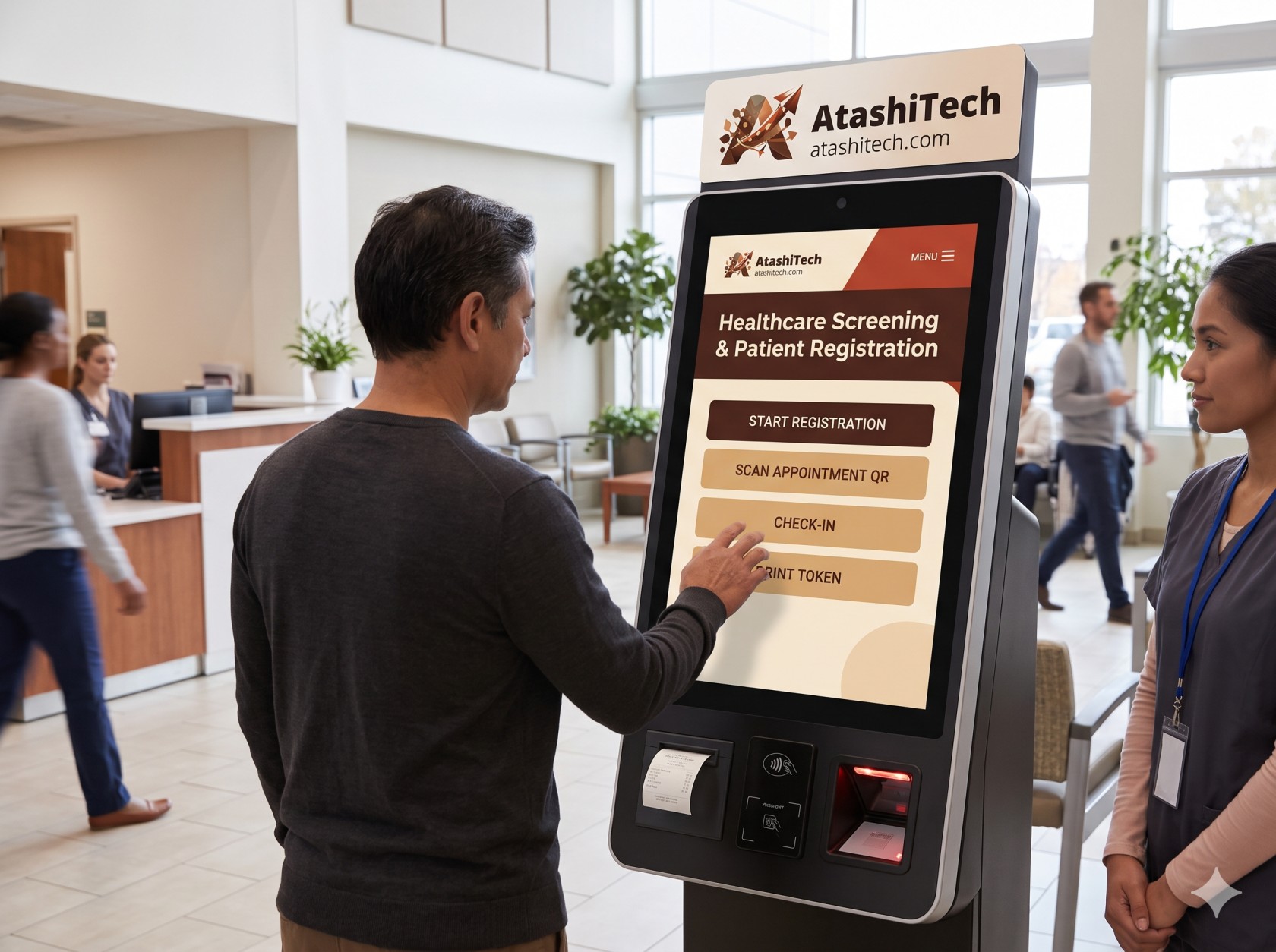
The healthcare screening patient registration kiosk is an innovative solution designed to enhance the patient experience and streamline administrative processes in healthcare settings. By enabling self-service registration and screening, these kiosks reduce wait times and improve operational efficiency.
As healthcare organizations in India seek to adopt technology that enhances patient flow and minimizes front-desk burdens, understanding the features and benefits of healthcare screening patient registration kiosks becomes essential.
Understanding Healthcare Screening Patient Registration Kiosk
Healthcare screening patient registration kiosks are self-service machines designed to streamline the patient registration process in healthcare settings. These kiosks facilitate various functions, including patient check-in, symptom screening, appointment scheduling, and data collection. By automating these processes, kiosks reduce the need for manual input by staff, allowing healthcare professionals to focus on patient care.
The benefits of using kiosks in healthcare settings are manifold. They can significantly decrease wait times for patients, enhance the accuracy of data collection, and improve overall operational efficiency. By providing a user-friendly interface, kiosks empower patients to manage their appointments and health information independently.
Moreover, kiosks enhance the patient experience by providing a quick and convenient way to register and access services. The integration of technology in healthcare environments not only improves patient satisfaction but also optimizes workflow for healthcare providers, leading to better resource allocation and reduced administrative burdens.
Key Features to Consider in Kiosk Solutions
When evaluating healthcare screening patient registration kiosks, several essential features should be considered. First and foremost is symptom screening, which enables patients to report their health issues before seeing a healthcare professional. This feature helps prioritize care based on urgency and allows for better allocation of resources.
Another critical aspect is the integration with Electronic Medical Records (EMR) and Hospital Information Systems (HIS). Such integration ensures streamlined data management, allowing patient information to flow seamlessly between the kiosk and the healthcare provider's systems. This connectivity not only enhances data accuracy but also facilitates quicker access to patient records.
Additionally, multi-language support is vital in diverse settings, as it enhances accessibility for patients from various linguistic backgrounds. By accommodating different languages, healthcare organizations can ensure that all patients can easily navigate the kiosk, improving their overall experience and engagement with the healthcare system.
Evaluating Software Customization and Integration
When considering healthcare screening patient registration kiosks, customization is critical to ensure that the software meets the unique needs of various healthcare providers. Different institutions may require specific workflows, user interfaces, or functionalities that align with their operational processes. This adaptability not only enhances user experience but also improves overall efficiency in patient registration.
Additionally, seamless integration with existing systems is vital for the smooth operation of kiosks. Healthcare environments often rely on various software applications, such as electronic health records (EHR) and practice management systems. Ensuring that kiosk software can integrate with these systems helps streamline data flow and reduces the potential for errors.
However, challenges in integration can arise, such as compatibility issues between different software platforms or inadequate APIs for data exchange. Organizations may also face difficulties in training staff to use new systems effectively. Addressing these challenges during the evaluation process is essential for successful implementation.
Regulatory Compliance and Data Security
In the healthcare sector, ensuring compliance with regulations such as HIPAA (Health Insurance Portability and Accountability Act) and NABH (National Accreditation Board for Hospitals & Healthcare Providers) is paramount when deploying patient registration kiosks. These regulations set the standards for protecting sensitive patient information and ensuring privacy. Non-compliance can lead to significant legal repercussions and damage to a healthcare provider's reputation.
Data security measures are essential to safeguarding patient information during the registration process. This may include encryption of data, secure user authentication, and regular security audits to identify vulnerabilities. Implementing robust security protocols not only protects patient data but also builds trust with patients who expect their information to be handled with the utmost care.
Failure to comply with regulations or to secure patient data can lead to severe risks, including data breaches that may result in financial penalties and loss of patient trust. Therefore, prioritizing compliance and data security in kiosk solutions is crucial for healthcare organizations.
How Healthcare Organizations Benefit from Kiosks
Healthcare organizations are increasingly turning to kiosks to streamline operations and enhance patient experiences. One of the primary benefits of implementing healthcare screening patient registration kiosks is the significant reduction in front-desk workload. By automating tasks such as patient registration, check-ins, and data collection, staff can focus on more complex patient needs, thus improving overall efficiency.
Kiosks can also effectively manage patient flow, especially during peak times. For instance, during flu season or other health crises, the influx of patients can overwhelm front-desk operations. Kiosks allow patients to self-register and check in, which minimizes wait times and reduces congestion in waiting areas.
Furthermore, the positive impact on patient satisfaction cannot be overstated. Patients appreciate the ability to complete their registration quickly and privately. This leads to enhanced overall service quality, as healthcare providers can devote more time to patient care rather than administrative tasks. In summary, the integration of kiosks in healthcare settings results in improved operational efficiency and a better patient experience.
How AtashiTech helps
AtashiTech builds healthcare screening patient registration kiosk software that speeds up patient flow and reduces front-desk load through self-registration, symptom screening, appointment check-in, and queue token issuance—all at the kiosk. This software integrates with essential peripherals, including printers and ID readers, to enhance the registration process. Additionally, it supports vital signs peripheral integration, ensuring that readings are recorded accurately in the patient's health record.
The software is designed for compliance with healthcare regulations, such as HIPAA and NABH, providing peace of mind to healthcare organizations regarding data security. By automating routine tasks, AtashiTech's kiosk solutions allow healthcare staff to focus more on patient care rather than administrative duties.
Conclusion
Healthcare screening patient registration kiosks represent a critical advancement in patient management and operational efficiency in healthcare facilities. Leveraging technology can significantly enhance the patient experience and streamline workflows.
Planning a kiosk project? Talk to AtashiTech about your requirements — every engagement is scoped and quoted individually.
Frequently asked questions
Related solutions

More from the blog
Android Digital Signage: How to Run Your Screens From One Web Portal
How Android digital signage works: pair an Android TV, TV box or tablet with a short code, build playlists in a web portal and change every screen from your phone.

ESS Kiosk Guide: HR Self-Service for Staff Without a Desk
What an ESS kiosk is, what workers can do at one, how sign-in and privacy work on a shared screen, and how to roll one out alongside the HR system you already have.
Remote Kiosk Management: How to Monitor, Update and Report on a Kiosk Fleet
What remote kiosk management covers: health monitoring, alerts, remote fixes, safe over-the-air updates and kiosk reporting that turns uptime into a measured figure.
Tell us the journey, the sites and the hardware you already have — every engagement is scoped and quoted individually.